Home | News | Conveyor Guarding Requirements UK | Accessafe
Conveyor Guarding Requirements UK | Accessafe
23 Sept 2026
Accessafe UK | Machinery safety guides
Conveyor Guarding Requirements in the UK: A Practical Guide
Conveyor guarding should prevent people from reaching dangerous moving parts, while allowing production, cleaning and maintenance to be carried out safely. The right solution depends on the conveyor, its hazards and the tasks people need to perform.
This guide explains the main conveyor guarding considerations for manufacturers, warehouse operators and machinery integrators: PUWER, hazard locations, fixed and interlocked guards, safety distances and inspection.
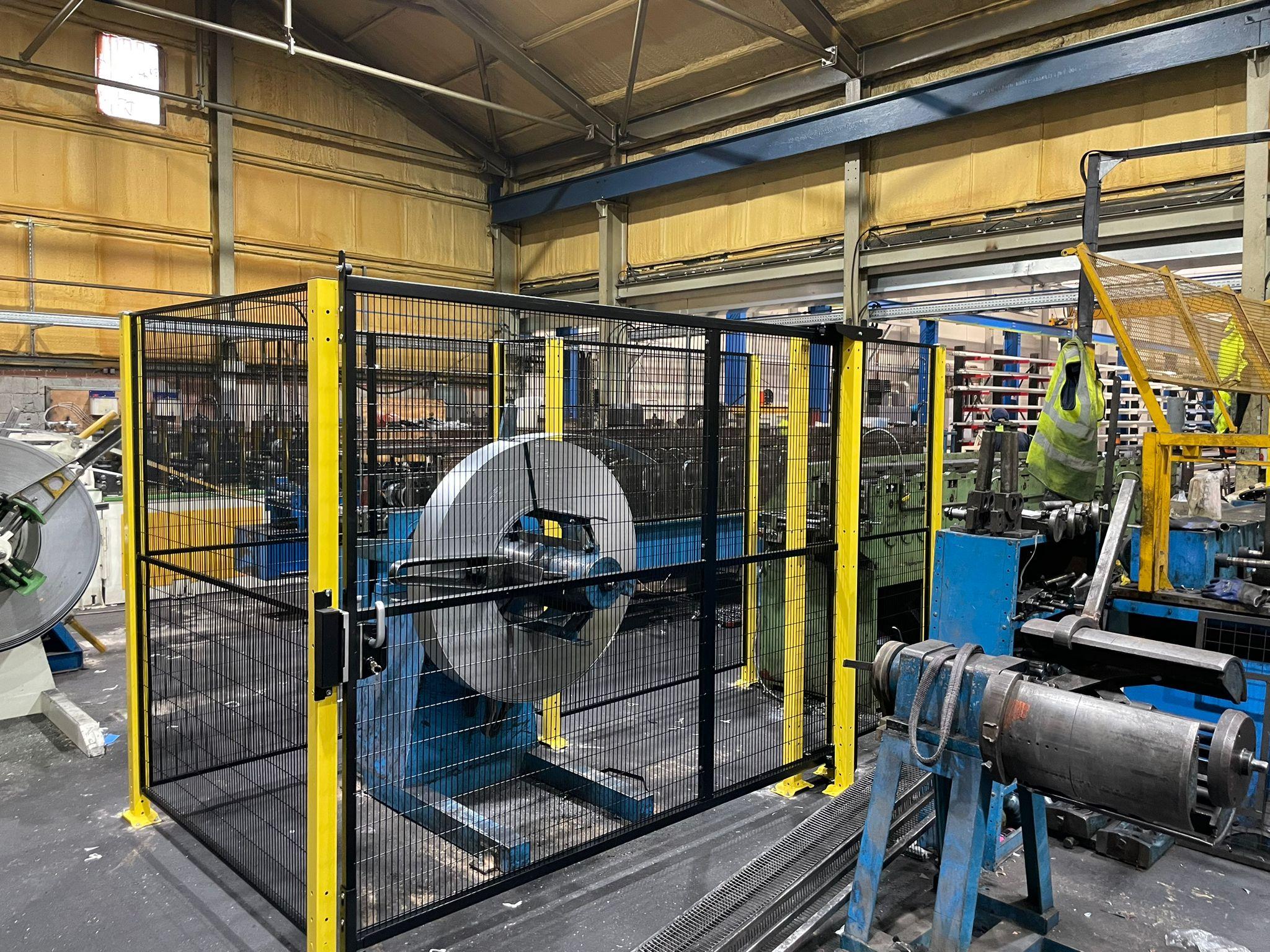
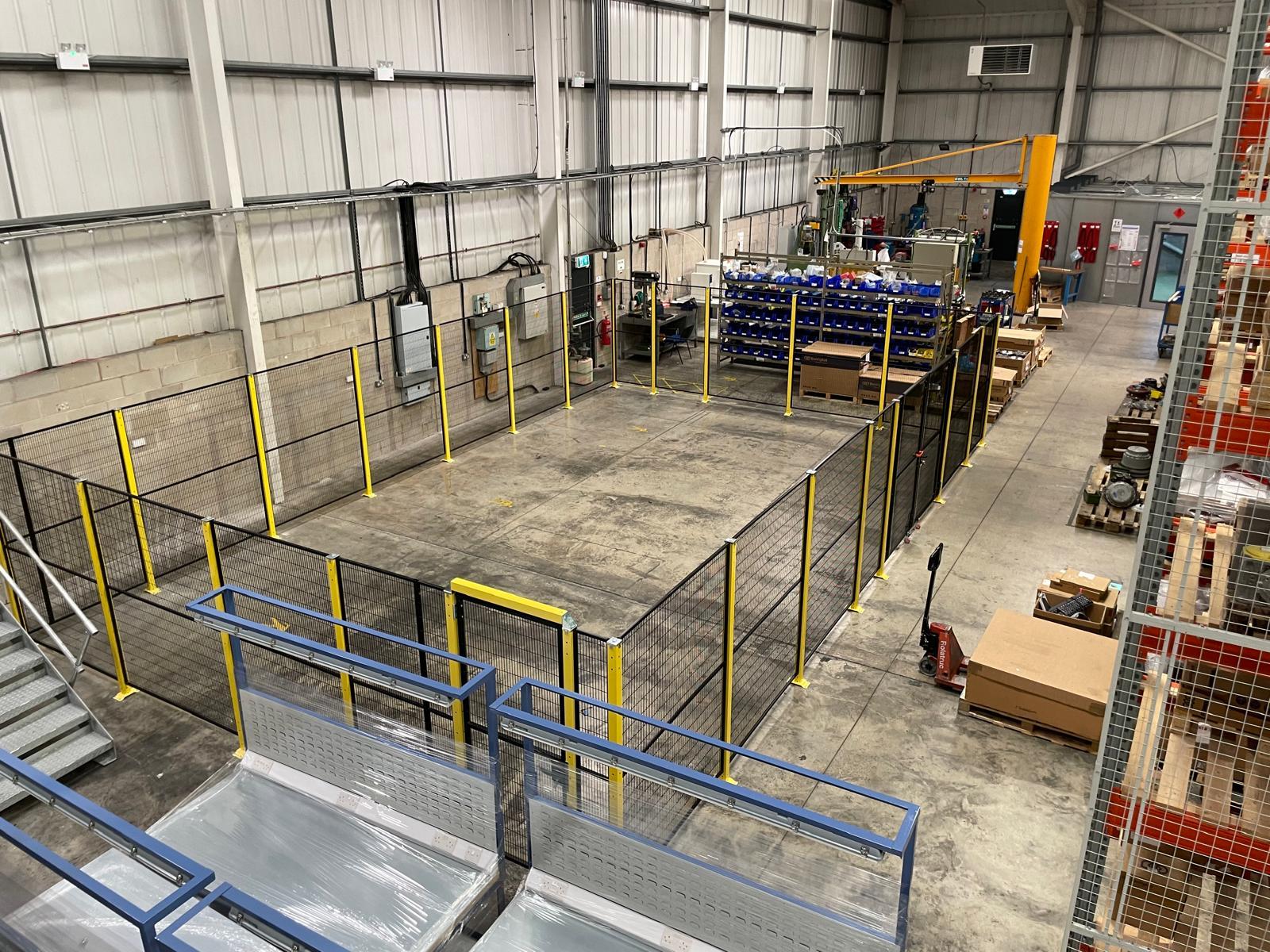
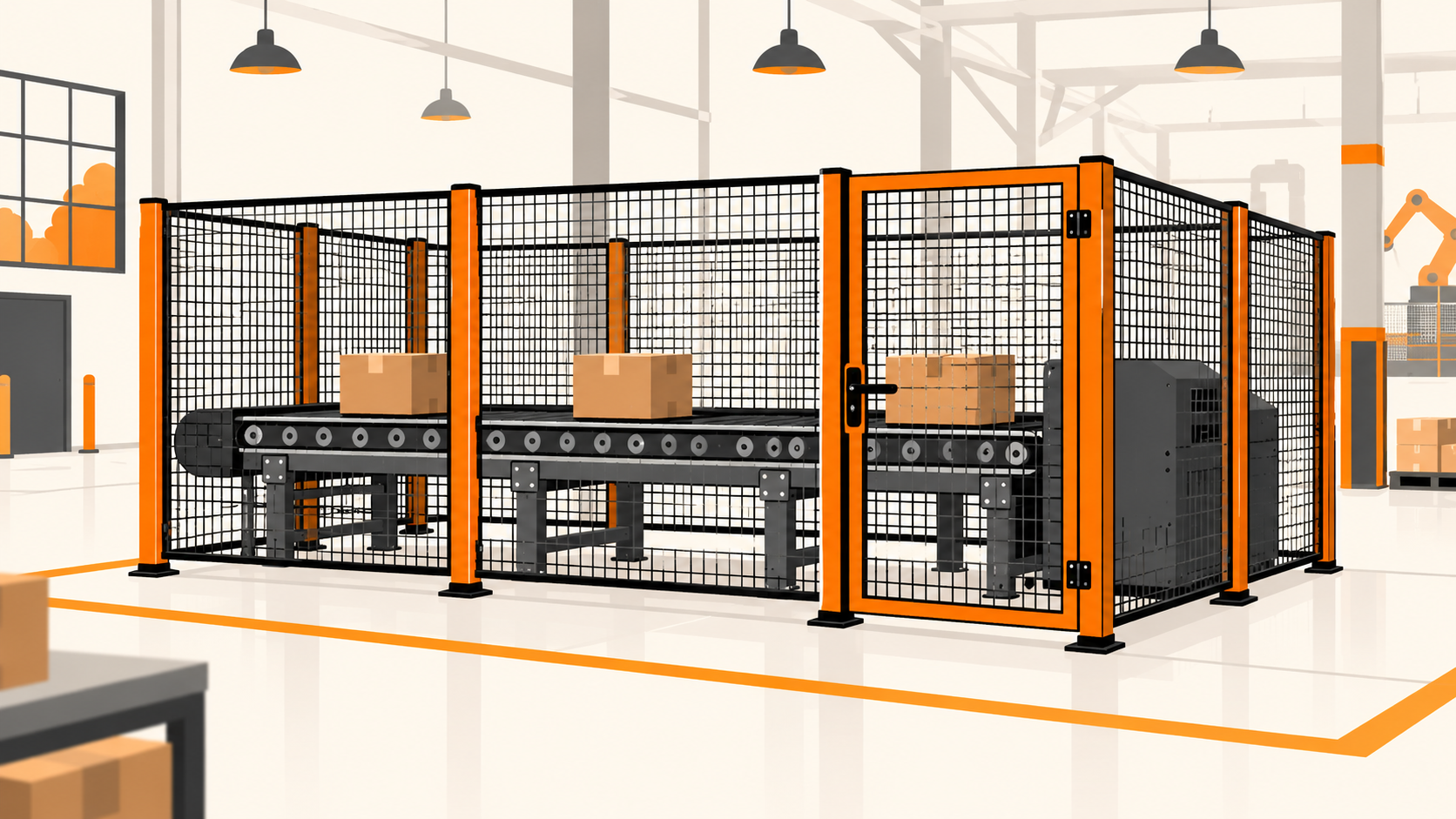
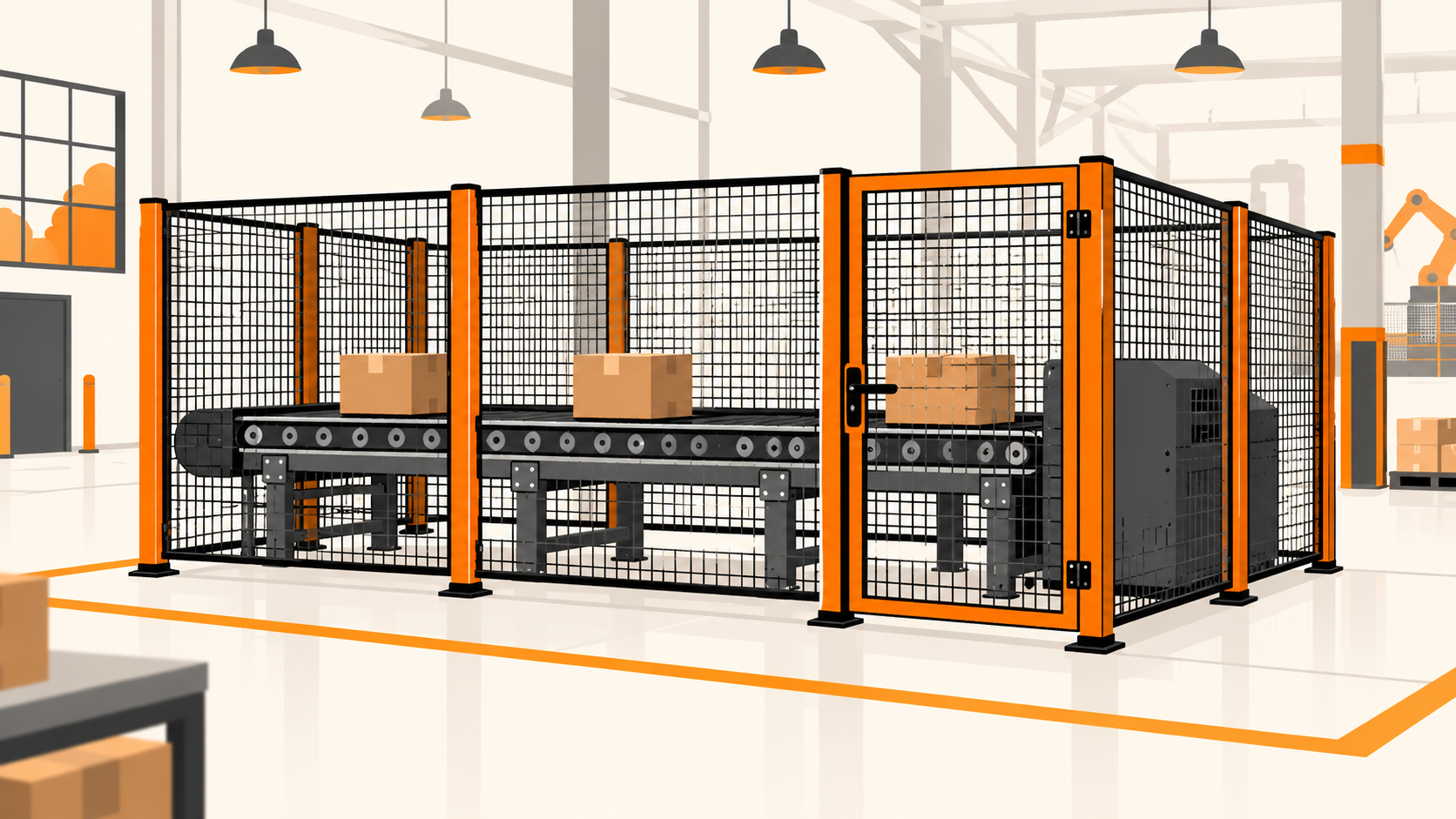
Concept illustration of conveyor perimeter guarding. It does not specify a compliant installation or safety dimensions.
What are the conveyor guarding requirements?
In Great Britain, the Provision and Use of Work Equipment Regulations 1998 (PUWER) require effective measures to prevent access to dangerous machinery, or to stop dangerous movement before a person enters the danger zone. Guard selection must follow the hierarchy in Regulation 11. [1]
For a conveyor, this means assessing accessible hazards and choosing appropriate protection. It also means planning for foreseeable activities such as retrieving fallen products, clearing jams and cleaning beneath the line. A conveyor that is protected during production may expose people to different risks during an intervention.
Scope: the legal discussion here focuses on Great Britain. For a site in Northern Ireland, check the applicable Northern Ireland legislation and regulator guidance.
Where do conveyors need guarding?
Start with the parts that can draw in, entangle, trap or crush someone. HSE's conveyor guidance identifies transmission components and trapping points between moving and fixed parts as recurring hazards. [2]
• Belt and roller nip points: locations where moving surfaces converge and can draw in fingers, clothing or hair.
• Head and tail drums: accessible areas where the belt turns around a drum or pulley.
• Drives and transmission: chains, sprockets, shafts and couplings.
• Transfer points: interfaces between conveyors, or between a conveyor and another machine.
• Underside components: return belts, rollers and drives that can be reached from below or beside the conveyor.
• Product openings: routes through perimeter fencing that could also admit a person into a hazardous area.
HSE's quarry guidance provides examples of conveyor guarding and nip-point risks. These illustrate why the complete conveyor route needs attention; sector-specific examples should not be treated as universal dimensions for every installation. [3]
What does PUWER Regulation 11 require?
The safeguarding hierarchy is more precise than simply choosing between a fixed guard and an interlock:
• Provide fixed guards enclosing dangerous parts wherever practicable.
• Where that is not practicable, use other guards or protection devices wherever practicable.
• Where those measures are insufficient or impracticable, consider appropriate protection appliances, such as jigs or holders, alongside the necessary information, instruction, training and supervision.
Guards must also be suitable, sufficiently strong, maintained and difficult to bypass. They must not introduce additional risks. HSE's L22 publication contains the regulation and supporting guidance. [1]
Training remains essential, but instructing someone to keep clear does not physically prevent contact. HSE's machinery safety guidance places engineering safeguards ahead of relying on behaviour to control remaining risks. [4]
Fixed guards or interlocked guards: which should you choose?
Fixed conveyor guards
Fixed guards are usually the starting point where access is not routinely needed. Removal requires a tool, or the guard is permanently secured. Conveyor applications may include drive covers, close-fitting enclosures or perimeter fencing. HSE recognises fixed guarding as one method of protecting hazardous conveyor components. [2]
Consider how the guard will perform in its actual environment. Will cleaning agents, impact, vibration or repeated removal affect its condition? Can an operator inspect the equipment without removing it? The design and construction of fixed and movable guards are addressed by ISO 14120. [5]
Interlocked access guards
Where frequent access is necessary, an interlocked movable guard may be appropriate. Its position is monitored so that the required safety function prevents hazardous operation with the guard open. Where danger continues after a stop command, guard locking may also be needed. [6]
Select the device and safety control system together. Simply fitting a switch to a door does not establish that the complete arrangement is adequate. BS EN ISO 14119 addresses interlocking-device design and selection, including reducing foreseeable defeat. [7]
How far should conveyor guarding be from the hazard?
There is no single distance suitable for every conveyor. Guard height, clear opening dimensions, hazard position and potential access routes must be considered together.
BS EN ISO 13857 provides safety-distance requirements intended to prevent upper and lower limbs reaching hazard zones. It does not solve every risk, and its scope does not provide measures against climbing over guarding. [8]
Check whether someone could reach over, under, around or through the proposed barrier. Also consider raised walkways and openings around services or product transfers. A fence can separate a walkway from a machine while still allowing an arm to reach a moving component.
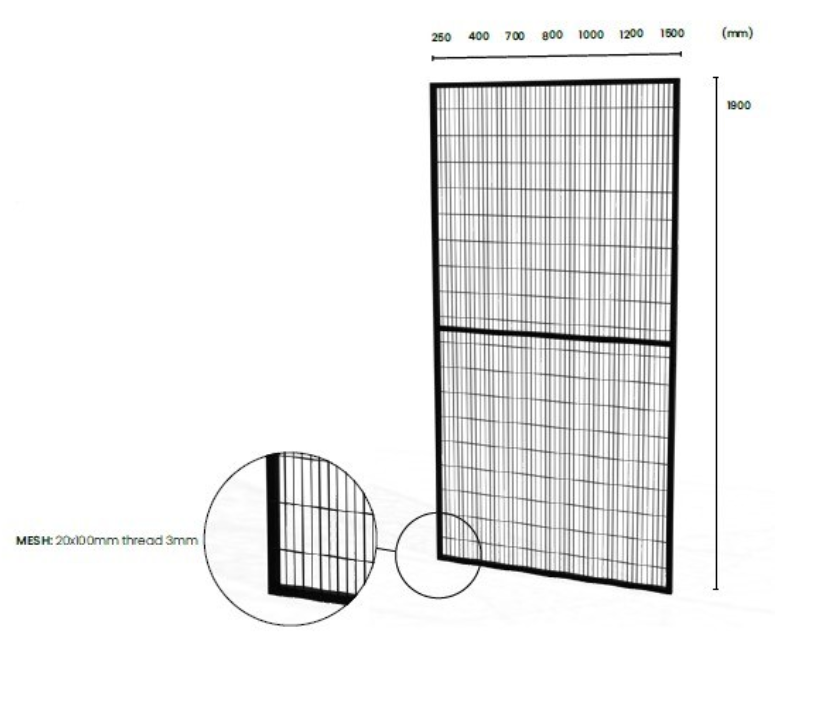
Use the applicable standard and risk assessment to establish dimensions. Do not assume a supplier's nominal panel height or mesh description proves that the installed layout is safe.
Cleaning, blockage clearing and maintenance
Plan the intervention before a jam or fault creates pressure to act quickly. HSE advises making equipment safe before maintenance, stopping movement, isolating relevant supplies and preventing inadvertent reconnection. Stored energy and components that could fall also need attention. [9]
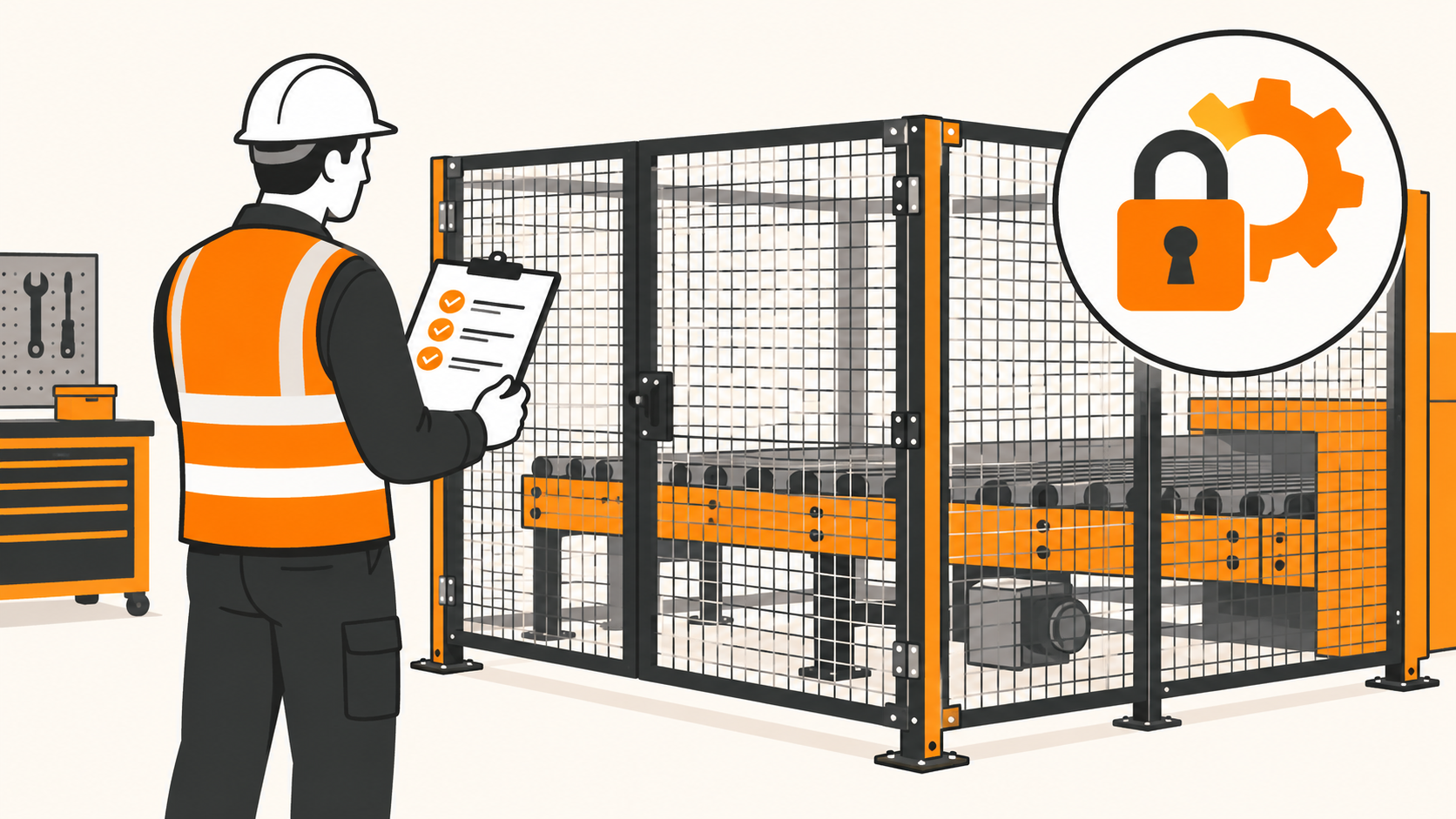
Plan safe access and energy isolation before maintenance. The illustration is conceptual, not an isolation procedure.
A task-specific procedure should address:
• Which equipment and energy sources could affect the work.
• How isolation will be secured and verified.
• How stored energy, gravity and trapped material will be controlled.
• Who is competent and authorised to perform the task.
• How guards will be restored and the area checked before restart.
An open interlocked gate is not automatically a safe isolation. If a task requires movement or energised equipment, it needs a specifically assessed method and suitable protective measures, not an improvised bypass. [9]
Are emergency stops a substitute for conveyor guards?
No. An emergency stop provides a way to respond when an emergency occurs. Guarding and other protective measures are intended to prevent exposure to danger. A reachable stop button does not prevent someone becoming trapped before they can operate it.
Emergency-stop arrangements should complement the safeguarding design. They should not be the reason an accessible dangerous component is left unprotected. [4]
Which conveyor guarding standards are relevant?
The following are useful starting points, not an exhaustive specification. Check each standard's scope and the applicable edition for the particular machinery.
BS EN ISO 14120 | Design and construction of fixed and movable guards. [5]
BS EN ISO 13857:2019 | Safety distances for reaching with upper and lower limbs. [8]
BS EN ISO 14119:2025+A11:2026 | Interlocking devices associated with guards. [7]
BS EN 619:2022 | Mechanical handling equipment for unit loads. [10]
BS EN 620:2021 | Fixed belt conveyors for bulk materials. [11]
A conveyor carrying individual cartons and a belt carrying loose bulk material may require different standards. The presence of a conveyor does not make BS EN 619 applicable to every system.
A practical conveyor guarding review checklist
Use these questions to prepare a review or supplier enquiry:
• Have all nip points and drive components been identified?
• Can anyone reach underside or rear components?
• Do transfers into other machines create additional hazards?
• Are guard openings, height and separation assessed together?
• Can someone enter through product openings or around fence ends?
• Does the access arrangement suit cleaning and changeover tasks?
• Are fixings secure and interlocks free from obvious damage or defeat?
• Are isolation arrangements clearly defined?
• Have changes to the line or nearby walkways been assessed?
• Are inspection findings recorded and defects acted upon?
This is a discussion checklist, not a complete PUWER inspection. HSE advises that inspection scope and frequency should reflect risk, deterioration and relevant manufacturer recommendations. Exceptional events or changes that could jeopardise safety can also trigger inspection. [12]
Frequently asked questions
Does every conveyor need perimeter fencing?
Not necessarily. The arrangement depends on the hazards and access required. Local guards, enclosures, perimeter guarding and other protective measures may be used in an assessed combination. [4]
Do roller conveyors need guarding?
Assess the actual design. Rollers and their interfaces can create trapping hazards, and the absence of a belt is not enough to establish safety. HSE includes conveyor design measures specifically intended to prevent finger trapping. [2]
Can existing conveyors be retrofitted with guards?
A retrofit may be possible, but review access tasks, clearances and any affected safety controls before selecting panels. Adding a barrier should form part of the machinery risk assessment, rather than being treated as a stand-alone compliance solution. See our guide to machine risk assessments.
How often should conveyor guards be checked?
There is no universal interval for every conveyor. Set checks and inspections from the risk assessment, equipment condition and manufacturer's guidance, and review them when circumstances change. [12]
Discuss your conveyor guard design with Accessafe UK
Planning a new conveyor installation or reviewing existing guarding? Accessafe UK offers machine guarding systems and design support for industrial layouts.
Share your layout, photographs, access requirements and available risk-assessment information so we can discuss the guarding you need.
Source information checked on 23 September 2026. Standards catalogue pages identify scope and editions; installation decisions require the applicable full standards.
• HSE: Safe use of work equipment, L22 — Regulation 11 and supporting guidance.
• HSE: Food processing machinery — conveyor hazards and safeguarding.
• HSE: Guarding in quarries — conveyor examples.
• HSE: Introduction to machinery safety.
• ISO 14120:2015: Machinery guards.
• HSE: PUWER overview.
• BSI: BS EN ISO 14119:2025+A11:2026.
• BSI: BS EN ISO 13857:2019.
• HSE: Maintenance of work equipment.
• BSI: BS EN 619:2022.
• BSI: BS EN 620:2021.
• HSE: Inspection of work equipment.
This information is based on our understanding of sources available in the public domain. Readers should independently verify the information. It is not a substitute for a site-specific machinery risk assessment, competent engineering advice or applicable legislation and standards. Illustrations are conceptual and do not represent installation specifications.
Please complete all the required fields below to register for an account with Accesssafe UK Ltd.
If you need any help, you can give us a call on
0121 348 7420
Login
You will be able to move through the checkout process faster, store multiple shipping addresses, view and track your orders in your account and more.
Please complete all the fields below and one of our safety specialists will be in touch. We aim to get all quotes back to you within 24 hours. Alternatively, you can give us a call on 0121 348 7420
Get A Design
Please complete all the fields below and one of our designers will be in touch. We aim to get all design quotes back to you within 24 hours. Alternatively, you can give us a call on 0121 348 7420